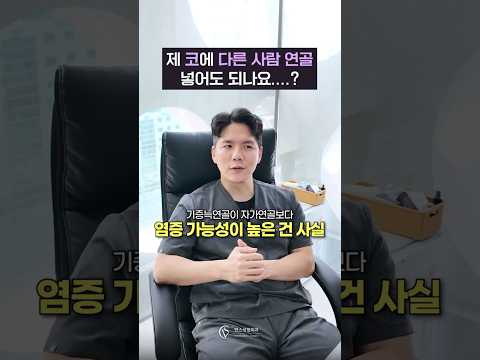
- Check if this sounds like you!
- Recommended if you have concerns like these.
- Does your nose still look flat even with heavy contouring?
- Do you always edit your nose in selfies?
- Does your nose look sunken compared with your forehead and chin?
- Does your nose make your face look unrefined or heavy?
- Does your tip look fleshy and blunt?
- Do you want to correct a hump, a short nose, or a crooked nose?
- Worried that your first nose surgery will look unnatural?
If even one of these sounds like you, your nose could look even better than it does now.
At DOY JUN Plastic Surgery, we always do our best so that your first nose surgery can be your last.
So what makes a nose beautiful?
Slightly curved? Straight? Forget the nose everyone else is getting. There's a nose that's right for your face.
From the nose's width-to-length ratio and the line from forehead to jaw, to a bridge suited to your face and the look you're going for, and finally the tip that completes the nose, DOY JUN Plastic Surgery creates a well-defined bridge line from every angle.
Key Point
- The golden ratio for an ideal nose
- The ideal golden ratio: the nose is 1/3 of the face in length and 1/5 in width, the dorsum is 80% of the nose's width, and the nostril wings match the distance between the eyes.
Key Point
- A well-defined profile
- A defined profile requires considering the height of the forehead and of the area between the brows, the tip, the length and angle of the philtrum, and the projection of the chin. Ideally, the angle between the nose and forehead is 130 to 140 degrees, and the nasolabial angle (between the nose and upper lip) is 90 to 95 degrees.
Key Point
- A bridge line that suits you
- Your bridge line is designed by choosing the line that suits you best, based on your face shape and the on-trend look you're after.
- Straight line
- A bridge that runs from top to tip without curves
- Suits these face shapes
- Long face: keeps the eye from wandering and balances the features. Angular face: harmonizes with the face overall.
- Not recommended for
- A long face or sharp features: can make your look appear even stronger
- Slightly curved line
- A straight bridge with only the tip curving upward
- Suits these face shapes
- Long and oval faces: the straight line tidies the face, while the tip softens your look.
- Curved line
- A curve that runs from between the brows down the bridge and ends in a lifted, defined tip
- Suits these face shapes
- Round face: draws the eye to the center, so the face looks slimmer. A face with a lot of open space: adds dimension to offset a flat look.
- Not recommended for
- A long face: the nose can look shorter, making the face look even longer
Key Point
- The tip that completes the design
- By balancing the tip vertically and horizontally, we find its most ideal high point, with no bluntness.
The key to a successful first surgery: a deeper level of analysis
Successful primary rhinoplasty at DOY JUN Plastic Surgery
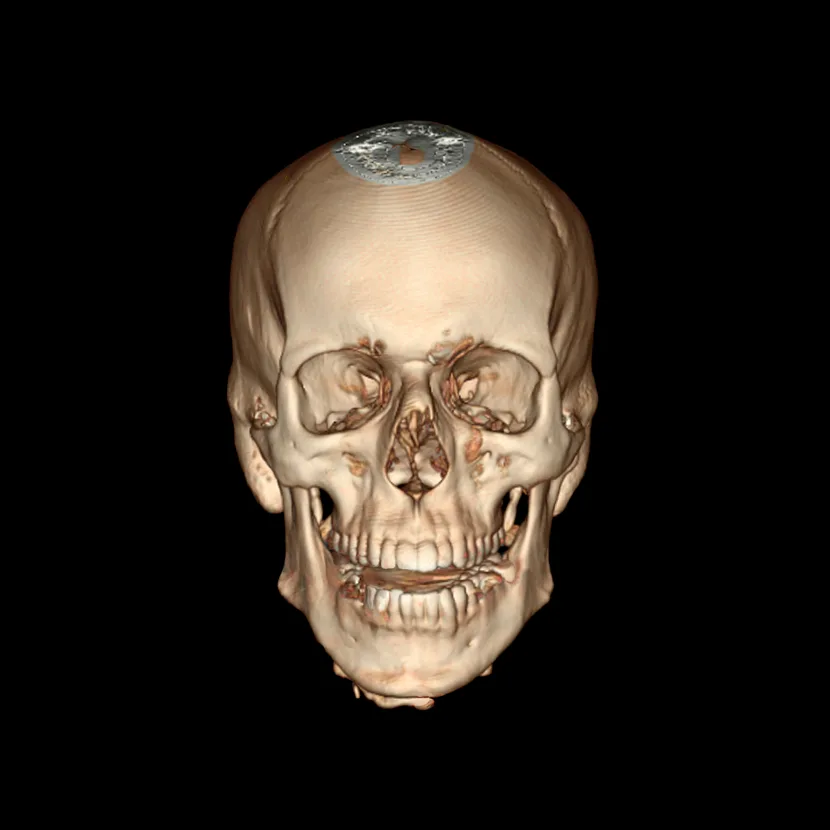
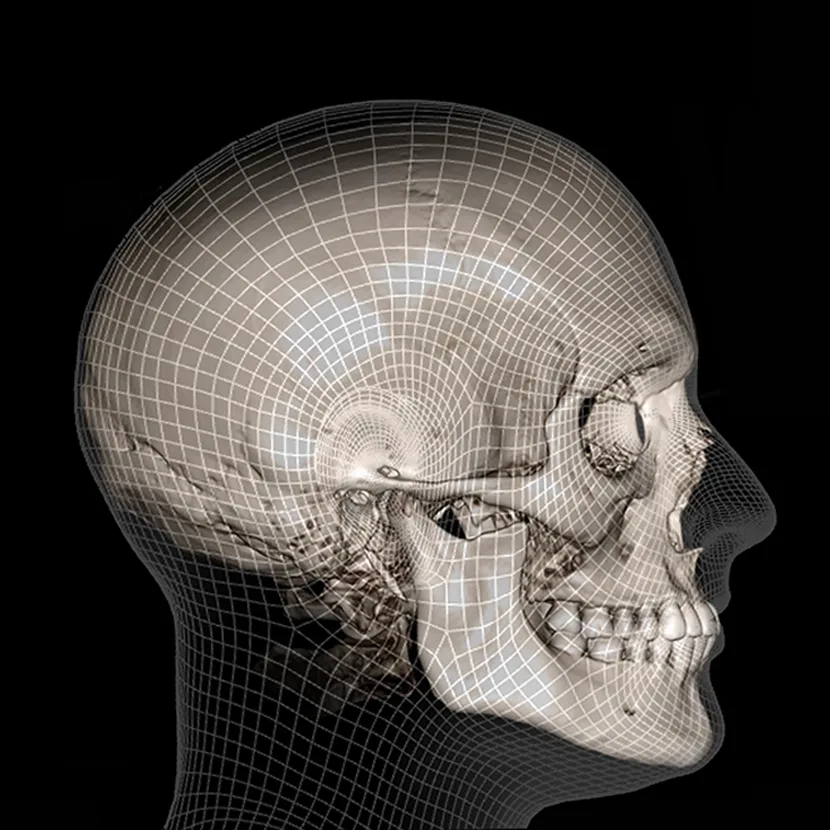
Surgery planned on outward appearance alone is more likely to fail. The nose has a complex three-dimensional structure, so the first step toward success is knowing the exact condition of the bone and cartilage hidden beneath the skin.
At DOY JUN Plastic Surgery, advanced 3D CT imaging lets us examine the internal structures in detail, including those the naked eye cannot see, to make surgery more accurate and safer.
- Precise diagnosis
- Before surgery, we analyze in fine detail the thickness and width of your nasal bones and the condition of your skin tissue, which differ from person to person. This helps us head off unexpected problems during surgery so it proceeds according to the planned design.
- Septum assessment
- We check the size, shape, and curvature of the septal cartilage, the key material in primary rhinoplasty, ahead of time. By accurately predicting how much cartilage can be harvested, we build a safe surgical plan without unnecessary extra cartilage harvesting.
- Functional assessment
- In the same visit, we also diagnose functional problems inside the nose that cause congestion, such as a deviated septum or enlarged inferior turbinates. Improving not only how the nose looks but also how it works leads to greater satisfaction after surgery.
A sleek bridge, a defined tip.
Custom materials for nose surgery at DOY JUN
Implants
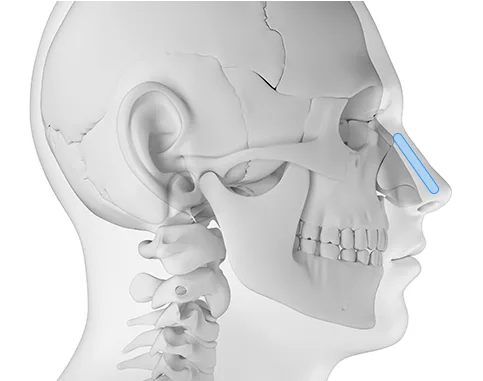
- Silicone
- · Used for: the bridge · Precisely carved to follow the contours of your forehead and nasal bone, creating a refined, well-defined line.
#Custom design
#Sleek line
#Semi-permanent
Donor materials
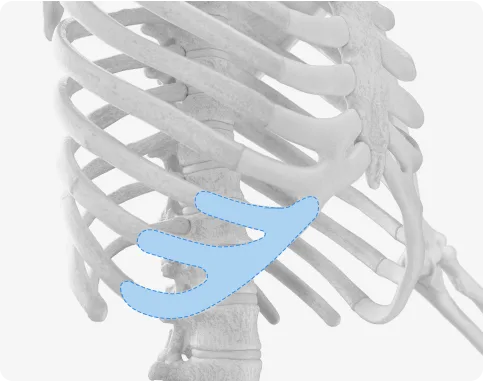
- Donor rib cartilage
- · Used for: the tip, columellar support · Safe, specially processed cartilage that can build a tip as sturdy as one made with your own rib cartilage, without surgery to take cartilage from your body.
#No harvesting needed
#Quick recovery
#Sturdy structure
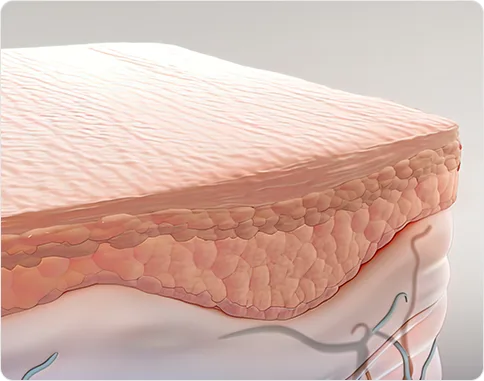
- Donor dermis
- · Used for: the bridge, the tip, skin reinforcement · Made from safely processed human skin, it is used to add thickness to the skin or raise the bridge without the burden of harvesting your own dermis.
#Added volume
#No scar worries
#Soft line
Your own tissue
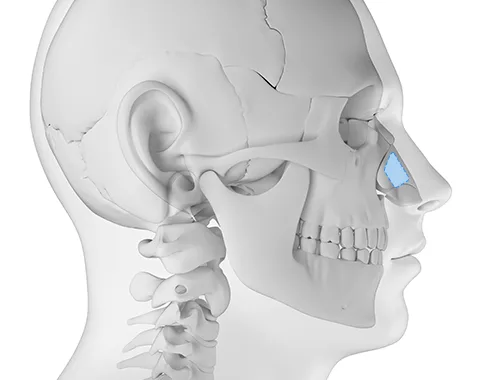
- Septal cartilage
- · Used for: the tip, columellar support · Harvested from inside the nose, so there is no visible scar. Flat and firm, it holds the tip up.
#Harvested inside the nose
#Firm support
#No scar worries
- Ear cartilage
- · Used for: the tip · Elastic and gently curved, it naturally refines the shape of the tip or wraps around an implant so it doesn't push through the skin.
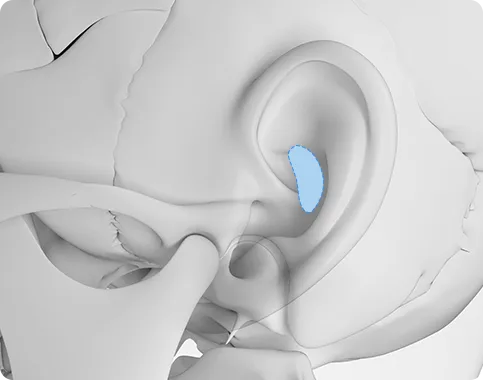
#Soft curves
#Natural feel
#Tip shield
- Your own rib cartilage
- · Used for: the tip, the bridge, revision surgery · Harvested from your own rib cartilage, so side effects are rare. With its strong support, it is used to lengthen the nose or create a more striking line.
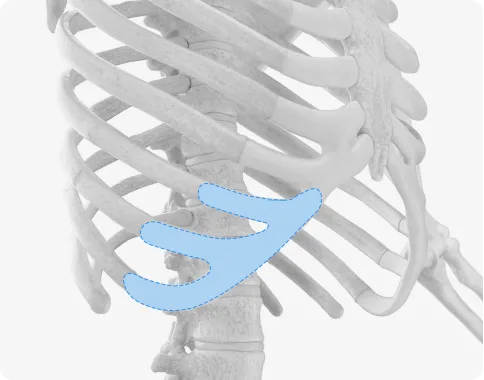
#Strong support
#Striking line
#Fixes a contracted nose
- Your own dermis
- · Used for: the bridge, the tip · Your own tissue, harvested from areas such as between the buttocks. It is a good fit if thin skin makes you worry an implant will show through, or if you want natural-looking height.
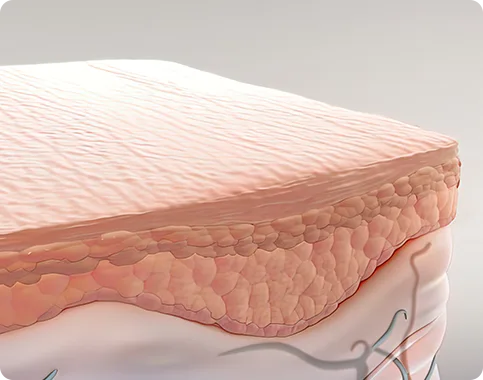
#Thin skin
#Keeps implants from showing
#Feels like your own tissue
DOY JUN Plastic Surgery promises a first nose surgery so satisfying it can be your last
We don't simply raise the bridge. We design your nose in proportion to your forehead, chin, and cheekbones, creating a defined, three-dimensional line that looks most natural on your face and won't look dated even as trends change.
We create a nose you'll be happy with every time you look, one that lets you show off your profile in photos with confidence.
Board-certified Plastic Surgeon
Lee Seungjun, Representative Director, DOY JUN Plastic Surgery
6 details that make the difference in results: this is nose surgery at DOY JUN Plastic Surgery
It's not just about raising the bridge. From ideal line design to functional improvements you can't see and a safe surgical environment, DOY JUN meets the standards that nose surgery calls for.
- A profile you'll want to show off
- Through a thorough consultation and examination, we confirm the bridge line and tip shape you want. Then we perform a primary rhinoplasty you'll be happy with, taking into account your face shape and the look you're going for.
- Striking or natural
- For your first nose surgery, we design around your preference for a more striking or a more natural look.
- Precise 3D CT analysis
- We precisely assess what the naked eye can't see, including bone size, the shape of the septal cartilage, and how much it curves.
- Three-dimensional design
- We look beyond the nose itself and consider the face as a whole, including the forehead, the height between the brows, the bridge line, the tip, the nasolabial angle, and the chin.
- Surgery by the Representative Director
- The Representative Director, who understands what patients need, handles the entire process personally, from consultation to performing the surgery. This eases anxiety and leads to greater satisfaction.
- Functional improvement
- A nose should be beautiful, but its essential role as the organ you breathe through matters too. We also improve functional problems that cause nasal blockage, such as a deviated septum and nasal valve narrowing.
DOY JUN Q&A
How long does swelling last after nose surgery?
- Swelling after nose surgery varies from person to person, but most of the major swelling goes down within 1 to 2 weeks. Residual swelling fades gradually over 1 to 3 months, and your natural-looking line emerges as time passes.
Can I push my nose up into a “pig nose” after surgery?
- In the early days after surgery, avoid pressing hard on or touching your nose. Once everything has settled firmly in place, normal face washing and light contact are fine.
Will smiling or making facial expressions feel strange after nose surgery?
- At first you may feel some tightness or a foreign-body sensation, but your natural expressions return as you recover.
Are nose surgery scars noticeable?
- Most incisions are made inside the nose, so external scars are barely visible. Even when an external incision is needed, it heals over time until it is hard to notice.
When can I return to my daily routine after nose surgery?
- Light daily activities are possible from the day after surgery, and you can gradually do more once the splint is removed.
When can I drink alcohol or smoke after nose surgery?
- To support healing and prevent inflammation, we recommend avoiding alcohol and smoking for at least 3 to 4 weeks after surgery. This has an important effect on how stable your results are and how quickly you recover.
This page is a translation of information from DOY JUN Plastic Surgery's Korean website. Please confirm the details during a consultation.