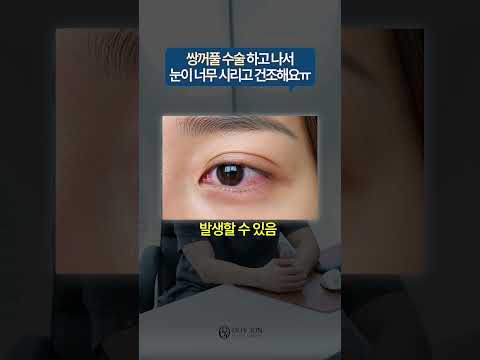
“Which one looks like your eyes right now?”
- Less than 70% of the iris visible
- Iris covered by 3 to 4 mm
- Eyelid covers the eye down to the center of the pupil (mild)
- Eyebrows and forehead used to open the eyes (severe)
- 80 to 90% of the iris visible
- Iris slightly covered by 1 to 2 mm
- Eyebrows and forehead not used to open the eyes
It's not just about changing the look of your eyes
Less forehead strain
Better field of vision
Refined eye shape
Correcting uneven eyes
No more sleepy look
Ptosis correction strengthens your ability to open your eyes, so you use the eye-opening muscles instead of your forehead. Experience eyes that open easily, functional comfort, and a clear, defined look
Incisional ptosis correction
- Surgery that removes unnecessary fat, muscle, and skin, then shortens and secures the eye-opening muscle (levator muscle)
- Surgery time
- 30 minutes to 1 hour
- Anesthesia
- Local anesthesia / IV sedation
- Follow-up visits
- 2 to 3 visits
- Recovery
- 1 to 2 weeks
- Stitch removal
- After 3 to 5 days
When incisional ptosis correction is needed
- Weak eye-opening muscles
- Eyes that look sleepy or heavy
- Sagging eyelid skin as well
- You want a definite improvement in your eye shape
- You open your eyes using your forehead (causing wrinkles)
How incisional ptosis correction is performed
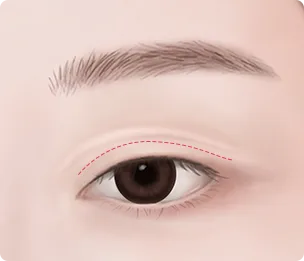
01. Design
An ideal line designed to suit the balance of your face
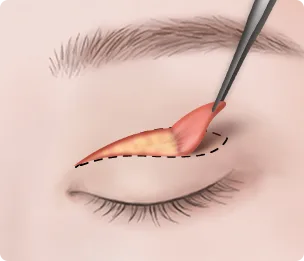
02. Tissue refinement
Excess skin and thick fat that interfere with the line are removed
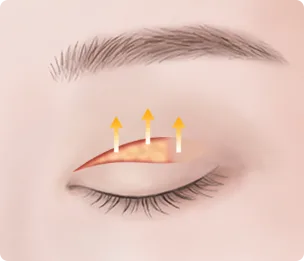
03. Muscle fixation
The eye-opening muscle is pulled taut to form a clear, well-defined adhesion
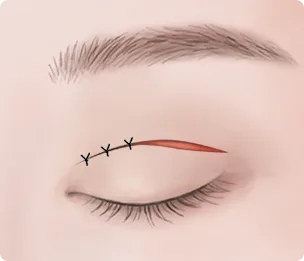
04. Fine suturing
Delicate finishing so that no scar is left behind
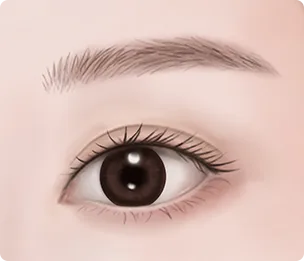
05. Result
Eyes that open easily, with a bright, defined look
Non-incisional ptosis correction
- Without cutting the skin, a suture is passed through tiny holes to tie and tighten the eye-opening muscles (Müller's muscle and the levator muscle)
- Surgery time
- 30 to 40 minutes
- Anesthesia
- Local anesthesia
- Follow-up visits
- 1 visit
- Recovery
- 5 to 7 days
When non-incisional ptosis correction is needed
- Mild ptosis (drooping upper eyelids)
- You're hesitant about incisional surgery
- You want a quick return to daily life
- You want a natural-looking correction
- You open your eyes using your forehead (causing wrinkles)
How non-incisional ptosis correction is performed
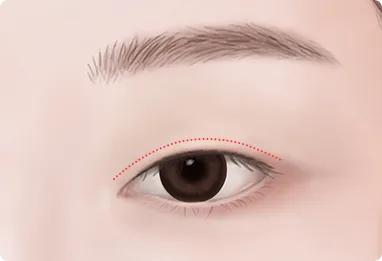
01. Precise design
We design an exact line that takes the unique features of your eyes into account.
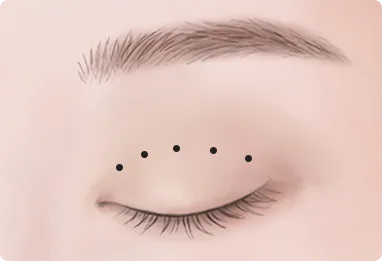
02. Tiny entry points
Tiny holes are made precisely at the designed points.
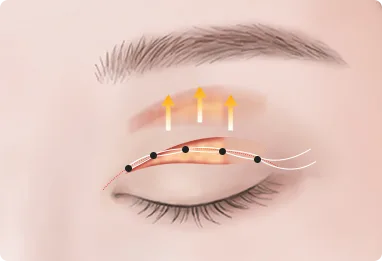
03. Natural adhesion fixation
The skin and muscle are tied together to form a firm adhesion that won't come undone.
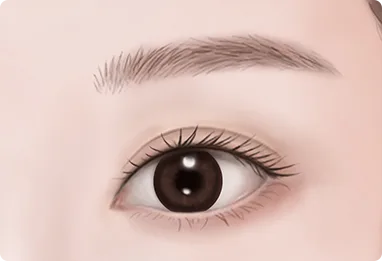
04. Your new eye shape
The result is an ideal eye shape that is clear and well defined.
Key points of ptosis correction at DOY JUN Plastic Surgery
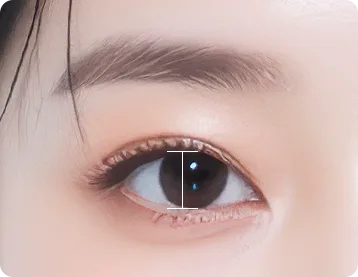
Preventing overcorrection
Fine adjustments accurate to within 1 mm prevent overcorrection and bring both sides into symmetry.
Preventing forehead wrinkles
Strengthening the eye-opening muscles breaks the habit of lifting your eyes with your forehead. This prevents forehead wrinkles and can even ease headaches.
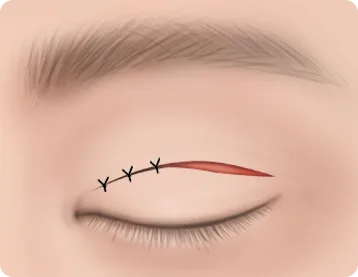
Meticulous suturing
With careful incision and suturing, surgical marks are barely noticeable even when your eyes are closed.
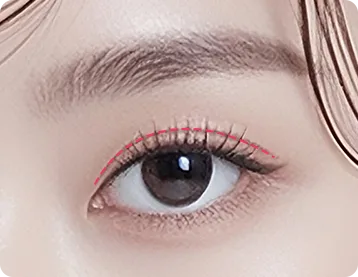
Functional improvement
Improves your field of vision and helps prevent eyelashes poking the eye, frequent tearing, eye discharge, corneal damage, and more.
Our promise at DOY JUN Plastic Surgery: eyes you'll love to see in the mirror
The smallest difference in the eyes can change your whole impression. How strongly you open your eyes, their width, their angle, and other factors can all make eyes look unnatural. That's why eyes need to be clear and defined, yet natural.
At DOY JUN Plastic Surgery, we analyze your eyes and face from every angle to create the eyes that suit your face best
- Eye shape / size
- Analysis of eye size, upper-to-lower proportions, eye shape, and how much of the iris shows
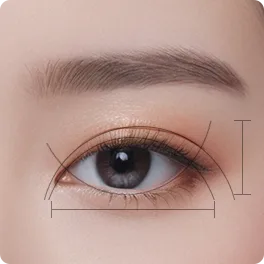
- Inner and outer corners
- We analyze eye shape, including eye size and upper-to-lower proportions.
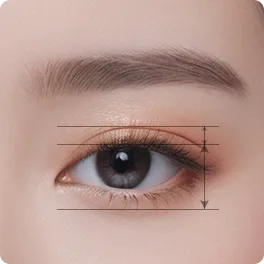
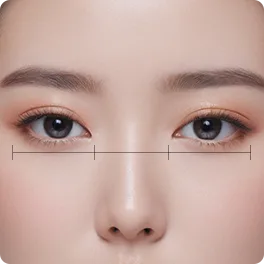
- Facial space and eye spacing
- Analysis of open space on the face and the distance between the eyes
- Skin and muscle
- Analysis of skin elasticity, muscle, fat, and more
This page is a translation of information from DOY JUN Plastic Surgery's Korean website. Please confirm the details during a consultation.