A blocked nose isn't a “constitution” problem. It's a “structure” problem.
Rhinitis can be divided into two types: allergic rhinitis and rhinitis caused by the structure of the nose. Structural rhinitis can only be resolved with surgery.
We straighten the bent wall (septum), widen the narrowed roof (nasal valve), and shrink the swollen tissue (inferior turbinates).
Deviated septum
- When the septal cartilage, the wall that divides the nostrils, bends into a C or S shape, airflow is blocked on the narrower side. Rather than simply cutting out the bent cartilage, DOY JUN Plastic Surgery straightens it as much as possible, moves it back to the center, and trims only what isn't needed, restoring breathing while preserving the nose's support.
- Surgery time
- 1 hour
- Anesthesia
- Local anesthesia / IV sedation
- Follow-up visits
- 2 to 3 visits
- Hospital stay
- Not required
- Recovery
- 7 days
- Stitch removal
- After 7 days
Who deviated septum surgery at DOY JUN Plastic Surgery is for
- You have trouble breathing because of a deviated septum
- Medication hasn't relieved congestion or other symptoms
- Complications such as sinusitis or rhinitis have developed
- Your septum is bent for congenital or acquired reasons
- You have a crooked nose
- You want to improve both how your nose works and how it looks
- A congenital or acquired nasal condition makes daily life uncomfortable
Deviated septum cases
- 01
- Case
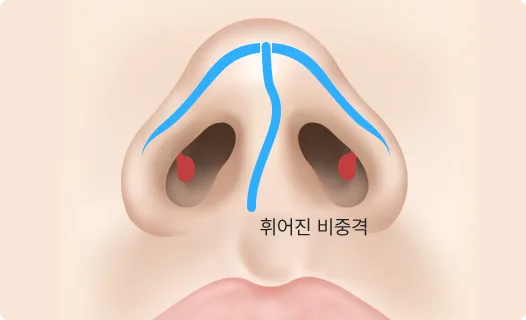
01. Deviated septum
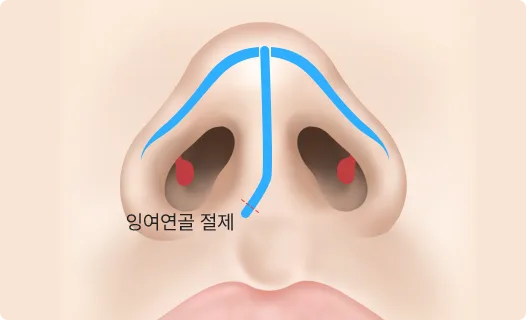
02. The bent septum is straightened, and the leftover excess cartilage is removed
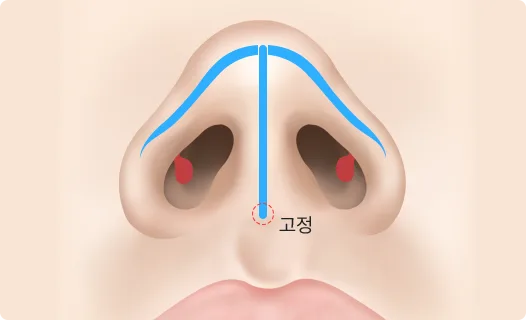
03. The septum is moved into the correct position and secured
- 02
- Case
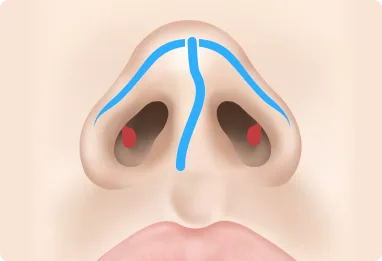
01. Deviated septum
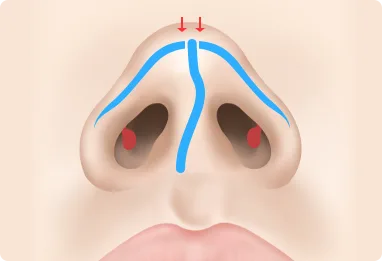
02. The septal cartilage is separated from the upper nasal cartilage
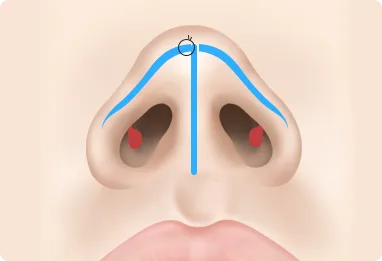
03. The septal cartilage is straightened and secured at its junction
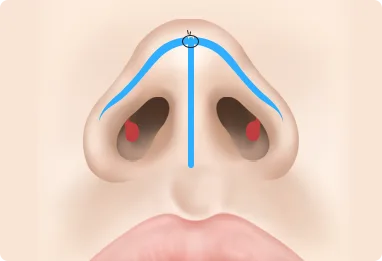
04. The septum is sutured to the remaining upper nasal cartilage
Nasal valve stenosis
- The nasal valve acts as the roof of the upper nose. When it narrows, breathing becomes difficult and your nose feels blocked. In nasal valve reconstruction, a wedge-shaped piece of cartilage is grafted between the narrowed cartilages to lift the collapsed roof and open up space to breathe.
- Surgery time
- 1 hour
- Anesthesia
- Local anesthesia / IV sedation
- Follow-up visits
- 2 to 3 visits
- Hospital stay
- Not required
- Recovery
- 7 days
- Stitch removal
- After 7 days
Inserting cartilage into the narrowed nasal valve to widen the space
Step. 01
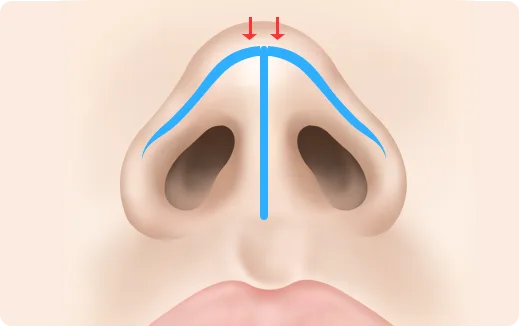
Nasal valve stenosis
Step. 02
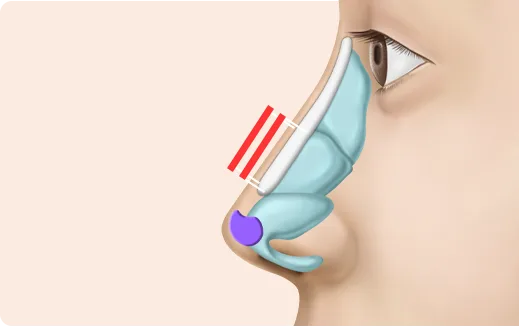
Cartilage grafted into the nasal valve
Step. 03
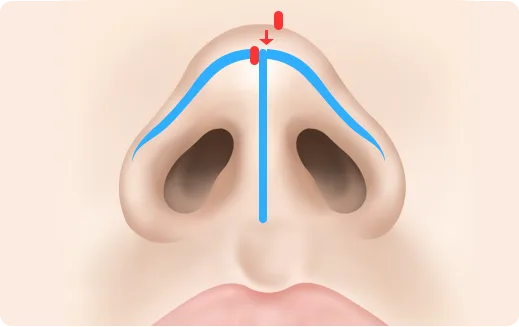
A wider nasal valve
Reinforcing a weak side wall with cartilage to widen the nasal valve
Step. 01
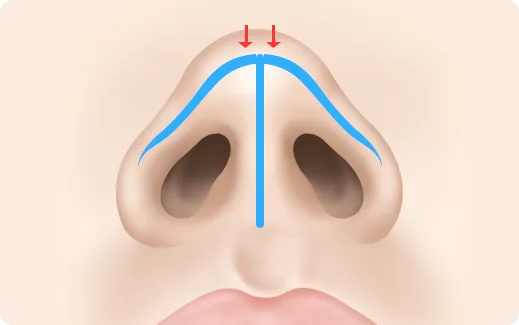
Nasal valve stenosis
Step. 02
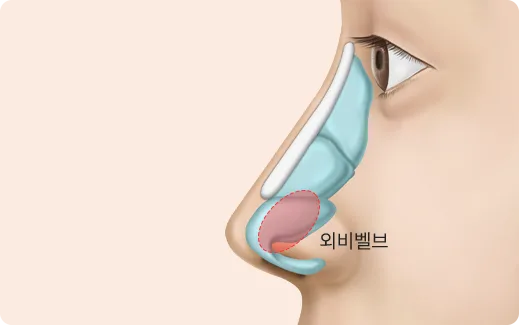
The weak side wall is reinforced with cartilage, widening the nasal valve
Step. 03
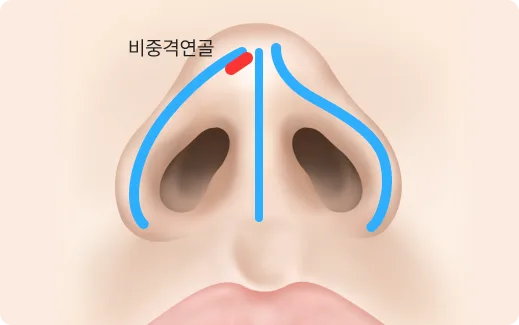
A wider nasal valve
Hypertrophic rhinitis
- The tissue inside the nostrils (inferior turbinates) may be swollen and blocking the airway. We remove excess volume from hardened mucous membrane that won't shrink even with medication, giving you back the breathing space you've lost.
- Surgery time
- 1 hour
- Anesthesia
- Local anesthesia / IV sedation
- Follow-up visits
- 2 to 3 visits
- Hospital stay
- Not required
- Recovery
- 7 days
- Stitch removal
- After 7 days
Hypertrophic rhinitis cases at DOY JUN
- 01
- Case
- Radiofrequency mucosal reduction
- Radiofrequency energy is used to contract the mucous membrane and shrink enlarged inferior turbinates. The procedure is simple, with little bleeding.
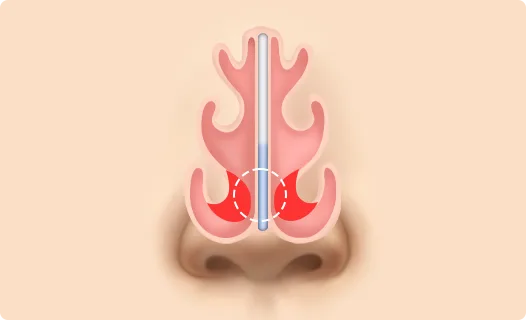
01. Enlarged inferior turbinates cause congestion and rhinitis
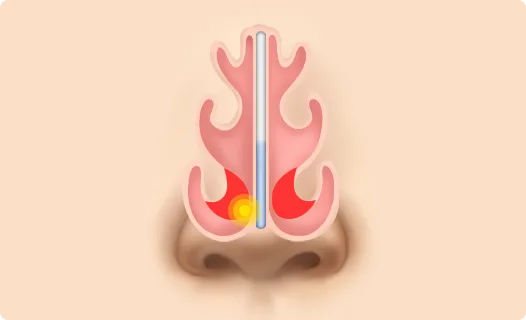
02. Radiofrequency heat is delivered to the inferior turbinates
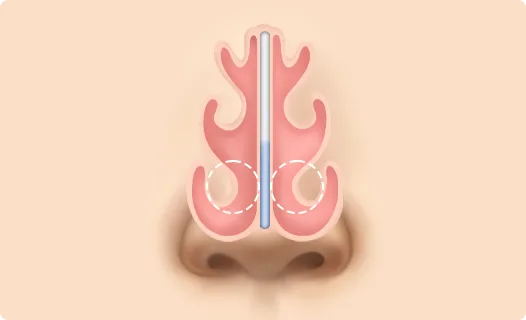
03. Treatment is complete once the turbinates are reduced
- 02
- Case
- Inferior turbinate reduction
- When radiofrequency doesn't shrink the inferior turbinates, the soft tissue and bone are removed directly.
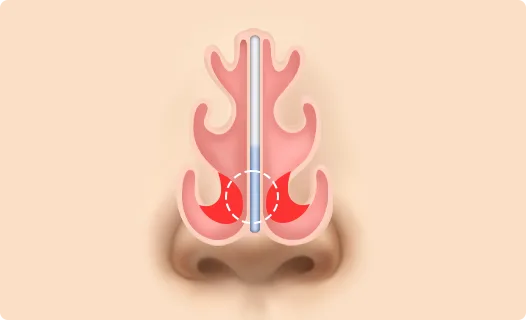
01. Enlarged inferior turbinates cause congestion and rhinitis
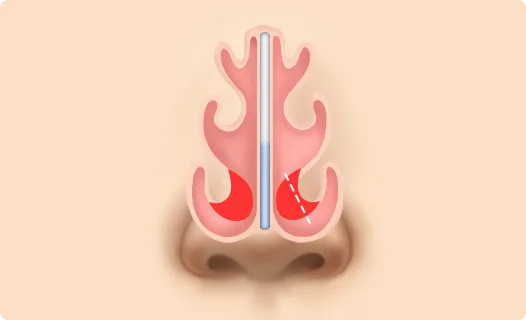
02. Turbinate soft tissue and bone are removed directly
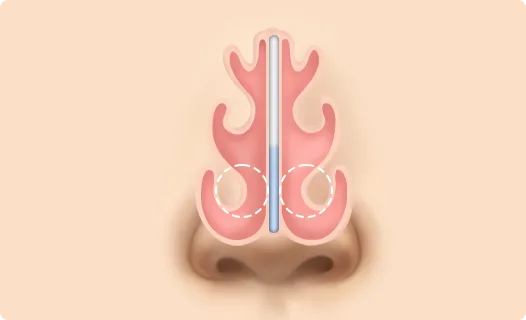
03. Treatment is complete once the turbinates are reduced
- Functional rhinoplasty with private medical insurance
- Half the cost, twice the satisfaction
| Deviated septum | Rhinitis | Sinus infection (sinusitis) | Nasal valve stenosis | |
|---|---|---|---|---|
| Exam | 3D CT scan | |||
| Reimbursement rate | 80~100% | |||
| Required documents | -Surgery confirmation -Admission and discharge confirmation -Itemized statement of medical fees -Receipt for admission and discharge fees -Other documents requested by your insurer | |||
| Insurance claim diagnosis code | J34.2 Deviated nasal septum | J34.3 Hypertrophy of nasal turbinates (bilateral) J30.4 Allergic rhinitis, unspecified | J01 Acute sinusitis J32 Chronic sinusitis | M95.0 OZ111 Nasal valve reconstruction |
| National Health Insurance coverage | Covered | Not covered (statutory) | ||
How the private insurance claim works
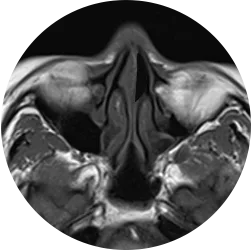
- Precise 3D CT diagnosis
- Detailed endoscopic analysis of the nose's internal structure and any conditions
- Confirming the diagnosis code
- The surgical diagnosis code is specified based on your test results
- Checking eligibility
- Confirming whether your insurer will pay and at what reimbursement rate
- Surgery and treatment
- Function improved and appearance refined at the same time
- Document support
- We carefully prepare all the documents required for your insurance claim
- Submitting to your insurer
- Submit the prepared documents by app or by mail
- Payment after review
- Once the review is complete, the insurance payment is deposited into your account
Whether coverage applies, and how much, can vary depending on when you enrolled in your private medical insurance and the terms of your policy. Surgery performed purely for cosmetic purposes, without improving a functional problem, is not eligible for private medical insurance coverage.
Precise 3D CT and endoscopic analysis
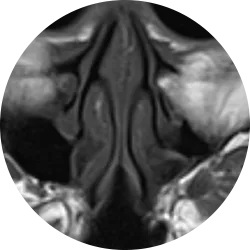
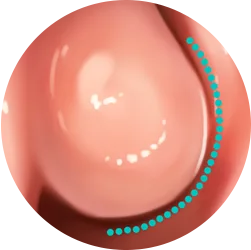
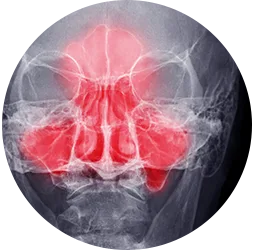
At DOY JUN Plastic Surgery, we use 3D CT and nasal endoscopy to precisely diagnose the bone structure of the nose, the width of the bones, the condition of the septum and whether it is bent, the inferior turbinates, and even the condition of the inner mucous membrane.
This lets us confirm whether functional improvement is needed. We aim for a satisfying surgery that keeps unnecessary tissue removal to a minimum and allows a quick recovery.
A sleek bridge, a defined tip.
Custom materials for nose surgery at DOY JUN
Implants
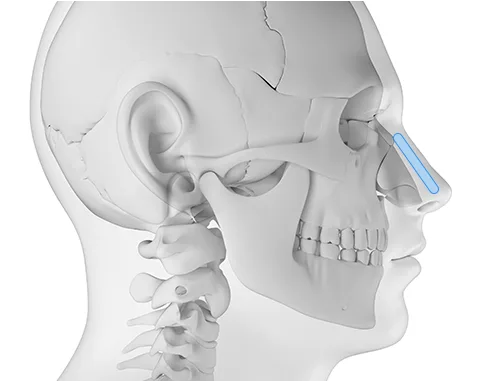
- Silicone
- · Used for: the bridge · Precisely carved to follow the contours of your forehead and nasal bone, creating a refined, well-defined line.
#Custom design
#Sleek line
#Semi-permanent
Donor materials
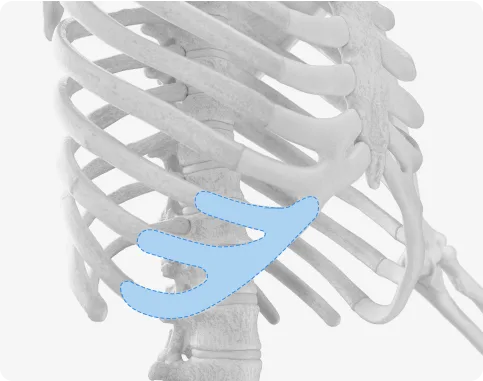
- Donor rib cartilage
- · Used for: the tip, columellar support · Safe, specially processed cartilage that can build a tip as sturdy as one made with your own rib cartilage, without surgery to take cartilage from your body.
#No harvesting needed
#Quick recovery
#Sturdy structure
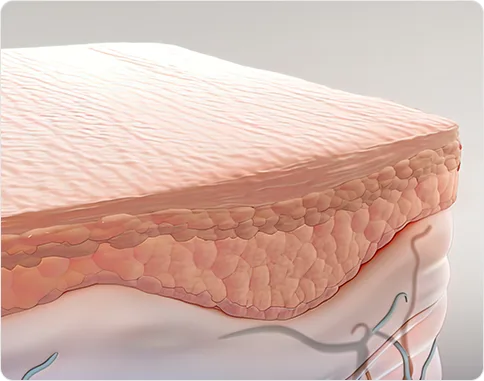
- Donor dermis
- · Used for: the bridge, the tip, skin reinforcement · Made from safely processed human skin, it is used to add thickness to the skin or raise the bridge without the burden of harvesting your own dermis.
#Added volume
#No scar worries
#Soft line
Your own tissue
- Septal cartilage
- · Used for: the tip, columellar support · Harvested from inside the nose, so there is no visible scar. Flat and firm, it holds the tip up.
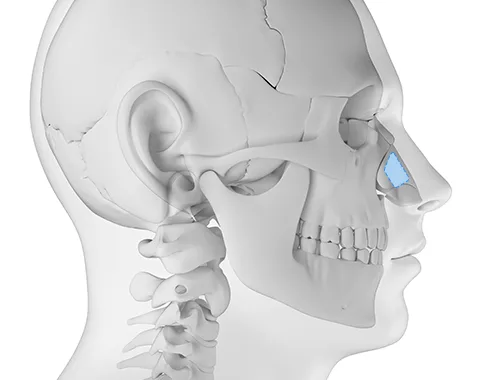
#Harvested inside the nose
#Firm support
#No scar worries
- Ear cartilage
- · Used for: the tip · Elastic and gently curved, it naturally refines the shape of the tip or wraps around an implant so it doesn't push through the skin.
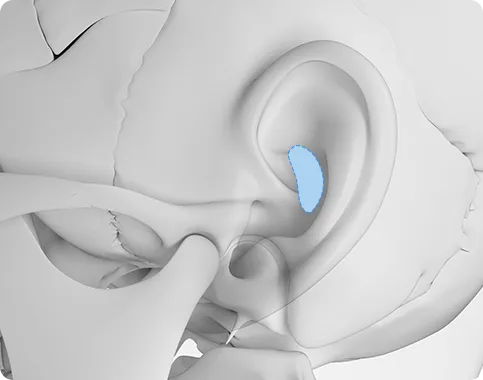
#Soft curves
#Natural feel
#Tip shield
- Your own rib cartilage
- · Used for: the tip, the bridge, revision surgery · Harvested from your own rib cartilage, so side effects are rare. With its strong support, it is used to lengthen the nose or create a more striking line.
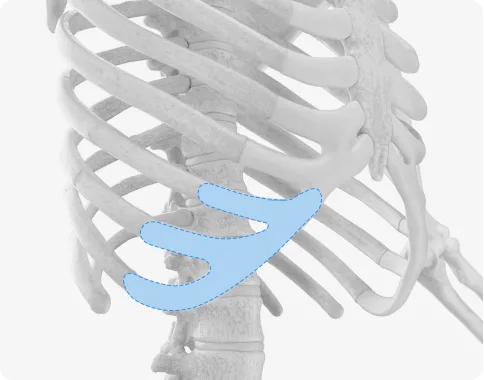
#Strong support
#Striking line
#Fixes a contracted nose
- Your own dermis
- · Used for: the bridge, the tip · Your own tissue, harvested from areas such as between the buttocks. It is a good fit if thin skin makes you worry an implant will show through, or if you want natural-looking height.
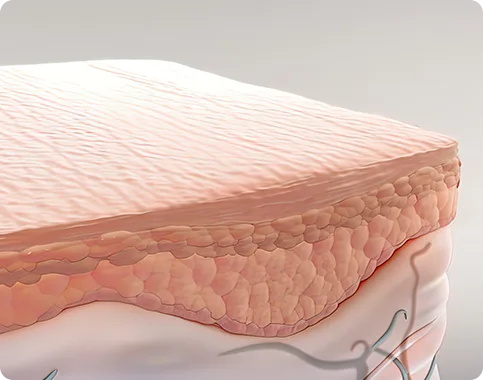
#Thin skin
#Keeps implants from showing
#Feels like your own tissue
6 details that make the difference in results: this is nose surgery at DOY JUN Plastic Surgery
It's not just about raising the bridge. From ideal line design to functional improvements you can't see and a safe surgical environment, DOY JUN meets the standards that nose surgery calls for.
- A profile you'll want to show off
- Through a thorough consultation and examination, we confirm the bridge line and tip shape you want. Then we perform a primary rhinoplasty you'll be happy with, taking into account your face shape and the look you're going for.
- Striking or natural
- For your first nose surgery, we design around your preference for a more striking or a more natural look.
- Precise 3D CT analysis
- We precisely assess what the naked eye can't see, including bone size, the shape of the septal cartilage, and how much it curves.
- Three-dimensional design
- We look beyond the nose itself and consider the face as a whole, including the forehead, the height between the brows, the bridge line, the tip, the nasolabial angle, and the chin.
- Surgery by the Representative Director
- The Representative Director, who understands what patients need, handles the entire process personally, from consultation to performing the surgery. This eases anxiety and leads to greater satisfaction.
- Functional improvement
- A nose should be beautiful, but its essential role as the organ you breathe through matters too. We also improve functional problems that cause nasal blockage, such as a deviated septum and nasal valve narrowing.
DOY JUN functional rhinoplasty Q&A
When is functional rhinoplasty needed?
- If you have ongoing nasal congestion, difficulty breathing, or mouth breathing or snoring during sleep, a functional problem may be the cause. Functional rhinoplasty is needed when there is a structural cause, such as a deviated septum or nasal valve narrowing.
Will functional rhinoplasty really make breathing easier?
- If your breathing difficulty is caused by a structural problem inside the nose, you can expect improvement after surgery. However, if you only have allergic rhinitis or a problem with the mucous membrane, surgery may have a limited effect.
How is functional rhinoplasty different from cosmetic nose surgery?
- Functional rhinoplasty aims to improve breathing and focuses on correcting the structure inside the nose. Cosmetic nose surgery mainly aims to improve appearance. The two have different goals and planning criteria, and they are sometimes performed together when needed.
How long is recovery after functional rhinoplasty?
- Initial swelling and discomfort usually last about 1 to 2 weeks, while the inside of the nose settles and breathing becomes easier gradually over several weeks. Recovery speed varies from person to person.
This page is a translation of information from DOY JUN Plastic Surgery's Korean website. Please confirm the details during a consultation.