Key points
- Dry eye disease is a condition caused by several interacting factors on the surface of the eye, and it can be caused or worsened by medical procedures, including eye surgery [1].
- Eyelid surgery is considered a procedure that can affect dry eye by mechanically changing how the eyelids function and how the tear film spreads [2].
- In the meta-analysis of a 2023 systematic review of upper eyelid surgery studies, measures including tear tests and dry eye questionnaires showed no significant results, but many individual studies reported an effect [3].
- To reduce dry eye caused by medical procedures, a structured evaluation of the eye surface before the procedure, patient counseling, and techniques that minimize tissue damage are described as necessary [2].
- If you are planning both eyelid surgery and vision correction surgery, it is recommended that you have vision correction only after you have fully recovered from eyelid surgery and your refraction and eyelid position have stabilized [4].
How are eyelid surgery and dry eye related?
Dry eye disease does not have a single cause. It is a condition in which several factors on the surface of the eye interact, and it can result from various medical procedures, especially eye surgery [1]. A 2020 review looked specifically at cases in which cosmetic eyelid surgery (cosmetic blepharoplasty) causes or worsens dry eye disease, and focused on ways to reduce and prevent dry eye after surgery [1].
Dry eye caused by medical procedures (iatrogenic dry eye disease) is characterized by a disrupted tear film balance, inflammation on the eye surface, and impaired function of the sensory nerves, and it can appear suddenly or persist for a long time after a procedure [2]. A 2026 review pointed out that this condition is an important but overlooked complication in both eye surgery and aesthetic medicine [2].
The review explains that cosmetic eye surgery, including eyelid surgery, can mechanically change how the eyelids function and how evenly the tear film spreads [2]. When you blink, your eyelids spread tears evenly across the eye, so if surgery changes the shape or position of the eyelids, this process can be affected.
What research has confirmed and what remains uncertain
Many studies have reported that upper eyelid surgery affects the cornea, eye pressure, dry eye, and quality of vision [3]. A 2023 systematic review examined 20 studies and performed a meta-analysis on 9 of them, organizing measures such as the Schirmer test, tear film break-up time, and the Ocular Surface Disease Index (OSDI) questionnaire by surgical method [3].
The meta-analysis found no significant results [3]. The authors noted that many studies nonetheless reported an effect of surgery on these measures, that few complications were reported, and that patients were satisfied with the cosmetic results [3]. In other words, there is not yet a clear conclusion about how much upper eyelid surgery causes dry eye.
The research summaries used for this article did not include figures on how often dry eye occurs after eyelid surgery. The 2020 review stated that it covers how often the condition occurs, but its summary does not include specific figures [1].
Eye problems that can appear at different times after surgery
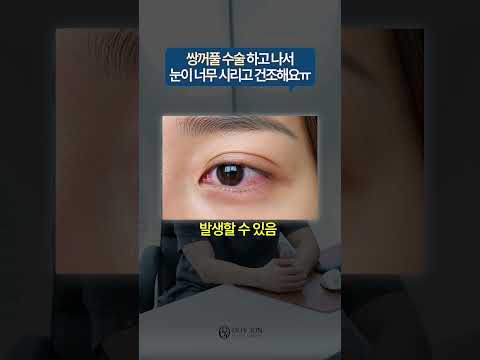
Problems after eyelid surgery can be grouped into cosmetic problems, functional problems, and problems of discomfort or symptoms, and they can occur together [5]. Stinging or gritty eyes and persistent watering should not be dismissed as part of recovery; it is best to have them checked by a doctor.
Complications of eyelid surgery range widely, from skin changes to sight-threatening emergencies, and some are described as preventable with a thorough preoperative evaluation and careful surgical technique [6]. One review grouped complications by when they most often appear, as follows [6].
- First week after surgery: scratches on the cornea (corneal abrasion) and sight-threatening bleeding behind the eye
- Weeks 1 to 6: an abnormal position of the upper or lower eyelid, misaligned eyes (strabismus), exposure of the cornea (corneal exposure), and watery eyes (epiphora)
- After 6 weeks: changes in eyelid height and shape, asymmetry, scarring, and long-lasting swelling
If your eyes are already dry before surgery
The 2026 review explained that as cosmetic procedures around the eyes, such as botulinum toxin injections and semi-permanent eyeliner tattoos, become more common, the risk has increased, especially for people with meibomian gland dysfunction or borderline tear function [2]. It also stated that evidence is emerging that the cumulative effects of repeated procedures and inadequate screening before procedures have contributed to a rise in long-lasting eye surface problems [2].
For this reason, the review named a structured evaluation of the eye surface before the procedure, patient counseling, and techniques that minimize tissue damage as the keys to prevention [2]. If your eyes tend to be dry, telling your surgeon before surgery is the place to start.
In lower eyelid surgery, a method that anchors the outer corner of the eye to support the lower eyelid (canthal suspension) is used to prevent complications, and it is described as especially useful when the lower eyelid is loose or the eyes are relatively prominent [7]. However, a method that suspends the muscle around the eye (orbicularis sling) is noted as possibly unsuitable for people with a history of dry eye [7].
If you are also planning vision correction surgery
Dry eye is considered a common discomfort after corneal refractive surgery such as LASIK [4]. These symptoms are described as worsening when there are coexisting eyelid or eye socket conditions, such as a lower eyelid that turns outward (ectropion), eyes that do not close completely (lagophthalmos), or thyroid eye disease [4].
Eyelid surgery can also affect the shape and refraction of the cornea, and changes in astigmatism have been reported after ptosis correction or eyelid surgery [4]. The review authors recommended that if you have cosmetic eye surgery such as ptosis correction, you should recover fully before vision correction surgery so that your refraction and eyelid position are stable [4].
What to ask during your consultation
The risk of dry eye varies from person to person depending on your baseline tear function, eyelid structure, and any previous eye surgery or procedures. Evaluating the eye surface and discussing the risks before the procedure are presented as the starting point for prevention [2]. Consider raising the points below at your appointment.
- Whether your eyes often feel gritty or sting, and any past diagnosis or treatment for dry eye
- Whether you have had or are planning vision correction surgery such as LASIK or LASEK
- Any procedures you have had around the eyes, such as botulinum toxin injections or semi-permanent eyeliner
- Whether you have any conditions of the eyelids or the area around the eyes, such as thyroid eye disease
- The plan for care if dry eye symptoms develop after surgery
Frequently asked questions
- Is it common for the eyes to become dry after eyelid surgery?
- The research summaries used for this article did not include figures on how often it occurs. A meta-analysis of upper eyelid surgery studies found no significant results in measures such as tear tests, but many individual studies reported an effect [3]. Risk varies from person to person, so it is best to have your eyes checked before surgery.
- If I have dry eye disease, does that mean I cannot have eyelid surgery?
- The sources for this article do not support saying that for certain. However, for cosmetic procedures around the eyes, such as botulinum toxin injections and semi-permanent eyeliner, the risk is described as higher for people with meibomian gland dysfunction or borderline tear function, so evaluating the eye surface and counseling before the procedure are emphasized [2]. A history of dry eye may also be taken into account when choosing the surgical method [7].
- In what order should vision correction surgery and eyelid surgery be done?
- One review recommended that if you have cosmetic eye surgery such as ptosis correction, you should recover fully before vision correction surgery so that your refraction and eyelid position are stable [4]. There are also reports that astigmatism can change after eyelid surgery [4]. It is best to decide the specific order and timing after seeing both an ophthalmologist and a plastic surgeon.
References
- Zhang SY, Yan Y, Fu Y. Cosmetic blepharoplasty and dry eye disease: a review of the incidence, clinical manifestations, mechanisms and prevention. Int J Ophthalmol. 2020.PubMed 32309188DOI
- Taşkıran Çömez A. Unseen Consequences: The Expanding Burden of Iatrogenic Dry Eye Disease in Surgical and Cosmetic Practice. Turk J Ophthalmol. 2026.PubMed 42343584DOI
- Rodrigues C, Carvalho F, Marques M. Upper Eyelid Blepharoplasty: Surgical Techniques and Results-Systematic Review and Meta-analysis. Aesthetic Plast Surg. 2023.PubMed 37430010DOI
- Denisova K, Barmettler A. Oculoplastic considerations for refractive procedures. Curr Opin Ophthalmol. 2020.PubMed 32487809DOI
- Mack WP. Blepharoplasty complications. Facial Plast Surg. 2012.PubMed 22723228DOI
- Lelli GJ Jr, Lisman RD. Blepharoplasty complications. Plast Reconstr Surg. 2010.PubMed 20195127DOI
- De Silva DJ, Prasad A. Aesthetic canthal suspension. Clin Plast Surg. 2015.PubMed 25440744DOI
This article is an English translation of general health information that DOY JUN Plastic Surgery compiled in Korean from the summaries (abstracts) of papers in international academic journals. Treatment methods and results vary depending on each person's condition, so please consult a specialist for an accurate diagnosis and treatment plan.